In Wigan Borough women are in leading roles at many of our local organisations.
Many more women are working hard every day in our local communities to support others and to help address inequalities and create change.
Here are just some of their stories:
Anika's story
Anika Day is head of Social Value and Communities at Cityheart, the company leading on the new Fettlers development in Wigan town centre. A leader in her field, Anika joined Cityheart as assistant development director following an extensive project management career in the construction industry.
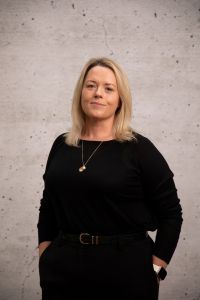 Anika met with us to talk about being a female leader in what could still sometimes be described as a male dominated industry, although Anika feels that this is slowly changing.
“There are still more men than women working in construction.” Anika says. “It can be a slower moving industry that doesn’t always evolve as quickly as others but I am seeing a shift. On the Fettlers project, for example, there are now multiple women in technical roles, and that’s really encouraging.”
It hasn’t always been that way. At the start of her career, Anika recalls being the only woman in board meetings and even being asked to make drinks for the room.
She also remembers a comment that stayed with her. After trying to be friendly and approachable with new colleagues, one person remarked that “empty cans often make the most noise”, a deliberate attempt to undermine her confidence.
“That comment really stayed with me,” Anika says. “I think I did tone down my personality for a while afterwards.”
Later in her career, while working as the only female leader on a major project, Anika began to recognise that the qualities often labelled as softer and ‘female’ were actually central to her success.
“I made a point of speaking to everyone on site, from builders to decorators, to understand what was working and what wasn’t. I was often the first there and the last to leave and I invested time in getting to know people. Some managers suggested I shouldn’t be doing that, but it built real loyalty. I’d found my leadership style, rooted in empathy and inclusivity and it worked. The project was a success. It’s important to recognise that what comes naturally to you can be your greatest strength.”
Anika acknowledges that strong personalities exist in every industry. “You’ll always find ‘alphas’ and big egos regardless of gender who will step over others to get ahead. That’s just how some people are.” she says. “But I’ve learned to move past that and have confidence in my own approach.”
Anika was also inspired by a female colleague from an earlier role. “She probably wouldn’t even realise it, but she was a mentor to me,” Anika says. “She was only a few years older, but incredibly impressive, confident in her ability, yet kind and generous with her knowledge. She wanted others to succeed alongside her. She wasn’t afraid to put the ladder down and help others climb.”
We discuss the importance of confidence, and Anika offers a thoughtful perspective. “Confidence isn’t a steady upward journey,” she says. “People often think it is, but in reality, it rises and falls depending on where you are in life and what you’re going through.”
Returning to work after having her daughter was a particularly challenging period. “It was incredibly difficult for both my confidence and my career,” she says. “Suddenly, I had to set clear boundaries around my time, but it felt like there was less space for that in the workplace.
I needed to stick to my working hours and occasionally take time off at short notice if my daughter was unwell but despite working hard, it felt like there wasn’t much understanding.”
However, Anika used that experience to shape her leadership approach. “I’ve carried that with me into management,” she says. “I always try to understand the challenges people might be facing.”
Despite the challenges, Anika is passionate about encouraging others into the industry. “There are so many different roles in construction, including careers people don’t typically associate with it. I feel very fortunate to have built a varied career, from project delivery and now into social value.”
“I absolutely love my current role. Seeing the wider impact of what we do on individuals and communities is incredibly rewarding.
“My advice to young women entering the industry is to believe in the value you bring and never be afraid to ask questions.
“And remember, those softer skills can often be what make you truly great.”
Jean's story
Jean Hensey-Reynard was born and educated in Wigan and now lives in Ashton-in-Makerfield. She has been an ambassador for the Holocaust Memorial Day Trust since 2001 and has led events to mark Holocaust Memorial Day in Wigan and Leigh each year for the past 25 years.
Although now retired from an extensive teaching career, Jean is still passionate about education and continues to inspire young people in schools across the borough to raise awareness of the Holocaust and other ongoing forms of persecution across the world.
Jean says
“I realised I wanted to be a teacher from a very early age. I wanted to empower, enable and educate young people to help them become the very best versions of themselves.”
As one of only a few girls at her grammar school, Jean encountered some initial negativity from male teachers about her ambition to go to university but with the support of both her parents, and inspired by her Deputy Head and RE teacher, Miss Louie Dickson, who had gone into teaching, despite her own father’s opposition, Jean’s determination to achieve her dream strengthened.
“Throughout life, I’ve often asked myself, ‘What would Miss Dickson say? She was a truly inspirational woman. And I think we all need that in life, to be able to see that our dreams are possible”.
The other strong woman in Jean’s life was her mum, Doris Linda Lyon. Jean describes her as, “A quiet, friendly woman, who brought me up with a Christian faith to live by, and instilled in me the importance of having values and manners. I’ve always tried to pass the importance of those qualities on to any young people I’ve taught.”
Jean went on to study at the University of Kent in Canterbury, reading for a Joint Honours Degree in English Literature and Theology before going on to study a Post Graduate Certificate in Education at St.Martin’s College, Lancaster, and then achieving her goal of becoming a teacher in an 11 to 18 Comprehensive High School.
It was travelling around the world that cemented Jean’s commitment to raising awareness of the true realities of the Holocaust, after she visited Anne Frank’s house and the Jewish Museum in Amsterdam and the most moving of all, visiting YAD VASHEM in Jerusalem, Israel.
Her travels also inspired her to pioneer a GCSE course in World Religions – covering Judaism, Christianity and Islam and she introduced the first ever A Level at her school that covered the six major religions of the world along with Situation Ethics and Philosophy.
Jean began collecting artefacts on her travels to share with her students, to help bring learning and lessons to life. Jean said “It was always important to me to make the RE Curriculum as exciting and interesting as possible. I really believe that educating people about the similarities and differences between us can help to eliminate racism. As a teacher, then later working in the voluntary sector, I’ve always wanted to help people understand each other, to bring people together. People often unite over art, food, poetry and culture.”
Jean retired from teaching in 2018 when she was at St. John Fisher Catholic High School, Wigan after being diagnosed with breast cancer. However, she had already planned the Holocaust Memorial Day ceremony with the school and, after her operation but before chemotherapy began, she was in attendance for the borough’s Holocaust Memorial Day ceremony. Following her radiotherapy treatment at the end of 2018, she decided to continue to volunteer to run the borough’s Holocaust Memorial Day events, a day marked annually across the world on 27th January.
Jean’s work on the Memorial Day, now in its 25th year, has taken her across the UK and earned her much well-deserved recognition, including being invited to attend Royal events such as Princess Kate’s “Together” Carol Service (2024) and King Charles’ Garden Party to recognise those people in Education (2025).
She was asked by the Holocaust Memorial Day Trust to be a guest speaker at a Department of Levelling Up event in London where she was very proud to showcase the work done here in Wigan and Leigh. She has also appeared in the press, in brochures, in a short film, and even on TV.
Despite the numerous accolades, Jean has always stayed true to her original dream of educating young people, and it is this that still brings her the most pleasure.
Jean said “The theme for our 25th anniversary event in 2026 was ‘Bridging Generations’ and it did feel quite special to realise that I have been a leader for Holocaust education in our borough for so many years. I love balloons and my motto in life, and one I try to convey to young people, is ‘Rise above the ordinary’. If you achieve success in life, some people may try to put you down, so you may have to work extra hard; but aiming to be extraordinary will help you to be the best that you can be.”
Reflecting on the early inspiration in life she received from her teacher and parents, Jean said “I hope that all young people are lucky enough to find role models like I did as this definitely helps you on the way to achieving your dreams and being a success.”
Rose's story
Rose Iskan is an engineer who came to the UK from a Kurdish community in Syria twelve years ago, with her husband (a doctor) and her son, who is now studying law. She tells us about how ISIS, also known as Islamic State, changed life for women in Syria and how she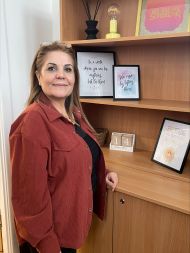 wants all young women to value their education and freedom and to take advantage of any opportunities they have to follow their ambitions.
Rose believes that women in the UK need to value education as rights that have been hard won can often be taken away again.
Growing up with her four sisters and three brothers, Rose told us that they each had the chance to be educated to a high level.
Rose says:
“At one time everyone in Syria had freedom and the chance to be educated.
“The presence of ISIS changed all that, especially for girls. There were suddenly so many new rules.
“In many areas of Syria women were suddenly no longer allowed to speak to men or sit next to a man. In many areas girls were not allowed to go to school or receive any type of education.
“We wanted to be strong, but it was difficult, we tried to remember that we were free in our minds.”
“I would advise all young girls to believe in yourself, be yourself, appreciate the education that is available to you and take any opportunities that come your way.
“Look after your health because your body is important and beautiful, so stay away from drugs and behaviours that harm you.
“I’m proud to be a woman and I’m proud to be a leader in life.
“I think women make great leaders because we are strong but also kind and loving to others so we think about the impact on others when we make decisions.
“Women can do anything, so find your next goal and make it happen.”
Rachel's story
Rachel Shraa from Leigh married into an Islam family and although she is very much part of the community, she chose not to convert to the Muslim faith.
Rachel talks about the false assumptions people sometimes make about the Muslim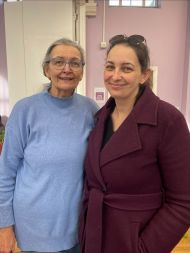 community. She says people need to take opportunities to follow their own path and also shares her experiences of being a leader in the business world, while offering advice for women who may be scared to follow their own aspirations.
The photo is of Rachel and her mum.
Rachel says:
“People make a lot of assumptions about the Muslim community without necessarily having a lot of knowledge about it, for example, I don’t think many people know that a Muslim man can marry a woman of a different faith, such as someone who is Christian or Jewish.
“We have a little boy who is educated in a Christian school, and he has both Muslim and Christian friends and he’s just starting to learn about the differences and the similarities.
“Many people might not know that in the Muslim faith the woman doesn’t usually take the man’s surname when you marry. I chose to take my husband’s name because that’s the British/Christian tradition.
“I would say I’m a leader in my work as a manager at a social care recruitment company in Liverpool, so I think you can be a boss and a mum, especially if you have the right support around you.
“To younger women I would say, be confident and trust your gut and don’t doubt yourself or other people may take the opportunities that you deserve.”
Leanne's story
Leanne Lucas, a teacher and survivor of the 2024 Southport attack, founded Let’s Be Blunt CIC to turn lived experience into practical, prevention-led action to reduce knife harm.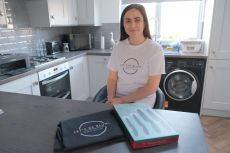
After hearing about her mission, Wigan Council partnered with Leanne to help bring the campaign into action locally.
Launched in May 2025, the initiative focuses on everyday safeguarding decisions – including encouraging the replacement of pointed-tip kitchen knives with rounded alternatives as part of safer environments.
For International Women’s Day, Leanne reflects on leadership, confidence and the importance of empowering and inspiring the next generation of women.
Leanne says:
“As women, we often learn early that the same behaviour can be judged differently. Speaking with conviction can be labelled as passion and leadership or as being too emotional.
“It has taken me until my thirties to feel confident showing up fully as myself. Being direct, voicing an opinion or showing emotion are not flaws, they are strengths.
“We live in a world where women can be judged on tone or appearance before their ideas are heard. But when we recognise women for their expertise, leadership and knowledge, we shift the narrative."
Through her campaign work, Leanne says she has experienced both challenge and encouragement and has seen the power of women uplifting one another.
"I believe women should actively celebrate other women. When we create space for each other to succeed, confidence grows and so does impact.”
She also emphasised the importance of calling out harmful behaviour. “We shouldn’t ignore it. Words have weight. You never know the impact your words can have, positively or negatively, on someone.”
After completing her diploma in therapeutic counselling, Leanne said she developed a deeper self-awareness and learned to trust her instincts.
“As women, we sometimes doubt ourselves -even when we already know what feels right. Learning to trust that inner voice has been one of the most powerful shifts in my journey.”
She believes that over time, people find those who align with their values.
“You eventually find your tribe across genders, ages and backgrounds, people who champion you and your vision.
“I’m incredibly grateful for the strong women who have stepped forward to support this campaign. Meeting people from all walks of life and learning every day has been one of the most meaningful parts of this work.”
Her advice to young women:
“My advice for young women is to look around you. Notice who inspires you, who energises you, who challenges you in the right way – and be brave enough to move towards that.”
Joanne's story
Joanne Bourne, from Wigan, invented Harry’s Harness to help keep her son, Harry, who has autism and ADHD, safe while out and about.
Since its launch last August, the harness has not only transformed hers and Harry’s life, but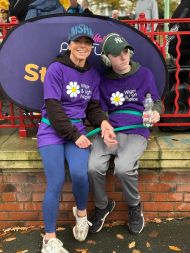 hundreds of other families across Wigan Borough and the country.
Mum-of-three, Joanne, 49, said without the harness, 13-year-old Harry would not be able to leave the house and fulfil a normal life.
As a parent of a child with complex needs, Joanne reflects on hers and Harry’s journey, and how she has become an inspiring leader to many.
The photo is of Joanne and her son Harry.
Joanne says:
“Harry was diagnosed with autism when he was two, and since then it has been a case of navigating our journey, and trying to make Harry’s life, and ours, as easy as possible.”
Before coming up with the idea for Harry’s harness, Joanne said she had tried lots of things to fulfil Harry’s love of the outdoors, including prams, wheelchairs, and different types of harnesses but none of them worked.
With help from friends, she created a specially designed waist harness for Harry, which also attaches to Joanne’s waist.
The harness, which is available for others to buy, has allowed Joanne to pursue activities with Harry that she would not have been able to do before, including rock-climbing and beach walks.
Joanne, who has a 22-year-old daughter, Emily, and a 21-year-old son, Joe, is a part-time teaching assistant and body builds in her spare time.
Reflecting on her role as a leader, she said: “Women are so resilient, we perform better under stressful situations.
“There’s nothing quite like being a woman who can multi-task, and just be everything to everybody, there is so much expectation on women these days. There’s nothing we can’t do.”
Joanne said she only realised what she was truly capable of later on in life.
She said: “Women are very strong, and it is not a ‘to be taken lightly’ phrase.
“We can do anything, but when we put that pressure on ourselves to be good mums, good friends, good at our jobs, good at everything else, it can be too much, but women are a force to be reckoned with.”
Joanne said while she does not feel like she is a natural-born leader, she said she “leads by example.”
“I am quite good at navigating all the things that I’ve got going on.
“I am not an overly confident person, but I can feel confident in the things that I can do.”
Her advice to younger women, and advice she regularly gives her daughter is: “It is important to belief in yourself.
“I’ve got good friends around me, and I’ve never been a big believer in my abilities, but I am always telling my daughter believe in herself, she is good at what she does.
“Believe in everything you do, you are good enough, you can do it if you want to, just go for it, you’ve got nothing to lose, dream big - I don’t think dreams can ever be too big.
“Don’t worry about what anybody else thinks, it’s all about you and as along as you are not hurting anybody or upsetting anybody then you have got nothing to lose.”
Joanne said her children are her “proudest achievement”, adding: “I am always their biggest advocate and biggest supporter because I just want them to have the happiest lives they can have.”
Esnath’s story
Leigh resident, Esnath, is a talented dancer, choreographer, fashion designer, hairdresser, and make-up artist. She also regularly volunteers to help others at Leigh community organisation, Everything Human Rights, and is described by those who know her as, ‘a real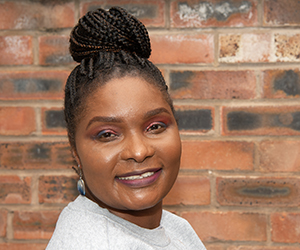 community leader, who brings people together’.
Esnath says:
"I was 23 when I first came to the UK from Zimbabwe, and I was very excited. At that time, I didn’t miss anything from back home, not even my friends. I’d look at how everyone was dressed and think, ‘Wow’. I’d make phone calls to family back home and say, ‘I’m here!’
"I didn’t come from a poor background, but I wanted to better myself and I imagined that I could do that here.
"I got a diploma in fashion design (from the University of Central Lancashire) in Preston and went on to study hairdressing and make up too. I made and sold clothes to help pay for my education.
"The people on my street in Leigh have always made me feel welcome. I have good friends and neighbours, and I help others in the community whenever I can.
"Of course, there have been times when I have missed home and felt as though I didn’t have a shoulder to cry on. British law makes it difficult for friends and family to visit, even for a short time. Visitors are often denied visas. It isn’t fair because our elderly parents might want to visit, but they don’t want to stay here permanently. The weather in England is too gloomy. They always want to get back home and see the sun again!
"Refugees come from lots of different backgrounds and for lots of different reasons. Some people are running from difficult circumstances. Every person is an individual with their own story so it’s important not to make assumptions about anyone.
"It’s important to take the time to listen and understand."
Grace's story
Campaigning for rights for young people has always been important to Grace, who was a member of Wigan and Leigh Youth Cabinet. And as she’s got older and started to embrace her own disability, so has campaigning for people with disabilities.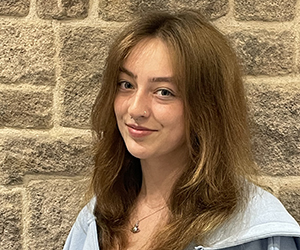
Grace says:
"I would like to see more forums and safe spaces for young people with disabilities, awareness and reduction of harmful language used against people with disabilities, and more accessibility in the borough.
"This is important to me as growing up with a disability I felt different, judged, and rejected. That’s why I want to support young people to feel confident within their own skin and give them the support I wish I’d had when I was growing up because no young person should feel that way. In the future I hope to create forums for young people to chat, make new friends and be able to talk and get off whatever is on their minds with like-minded people.
"Through the years I never accepted that I have a disability but as I have got older, I have realised that it’s a huge part of myself I cannot change, but it also doesn’t define me as a person which is a key message I want to share with other young people. I am still able to achieve my goals in my life.
"Being a member of Wigan and Leigh Youth Cabinet helped me improve my confidence to speak out about any issues I think need addressing and I would love to see bullying diminished.
"Bullying makes people feel more isolated and this is why I also want more education on disabilities as people fail to acknowledge they can be hidden. They can be mental or physical and affect people differently. I’d also like to see somewhere to anonymously voice issues to make people feel more comfortable with sharing their problems in the first place."
Terri's story
Terri works as the North-West regional campaigns officer for the Royal National Institute of Blind People (RNIB). Terri kindly shared her story with us about growing up with a severe vision impairment, and her experiences in the workplace.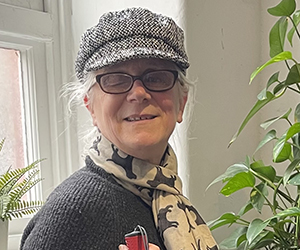
Terri says:
"My role at the RNIB involves being a two-way conduit between and working collaboratively with blind and partially sighted people and organisations.
"I was born with a condition called Aniridia, so am severely sight impaired, legally blind. It’s a genetic condition where the iris (the coloured part of your eye) is either completely or partly missing, so the pupil does not contract or expand to control the amount of light coming into the eye. Normally your pupils expand to let lots of light in if you’re in darkness or reduce the light if you’re in a bright environment so that you can see more easily but mine don’t do that. I’m particularly sensitive to sunshine and darkness and everything is very blurred.
"Being born with the condition in the 60’s, my dad gave up a good job and life in Slough moving the family to South-East London so that I could attend a specialist day school there and as he also had the condition I didn’t get lots of special attention at home. If I fell over, he’d just tell me to get up but that was the right thing to do!
"I’ve had a number of jobs over the years. In the early days I worked for private businesses in London, and I didn’t always have positive experiences and often didn’t find my employers to be especially empathetic.
"Until my 30’s, I often felt like a second-class citizen and around that time I had my children and was a home maker rather than being in the workplace for a while.
"It was a conversation with someone from Embrace (a local charity for people with disabilities and their families) that turned things around for me. They suggested I try volunteering, which I did, and that eventually resulted in me being where I am now, working for a national charity.
"In my current role, my impairment is an asset, because I can empathise with our customers, using my lived experience to back up resources and information we provide, and advocate on what will really be effective."
Steph's story
After working in the beauty industry for nine years, Steph wanted a change of career. She wasn’t sure what direction to take and so took a business admin apprenticeship with Wigan Council as she knew this would give her the opportunity to work with lots of different council services and potentially discover what she wanted to do. She found she really enjoyed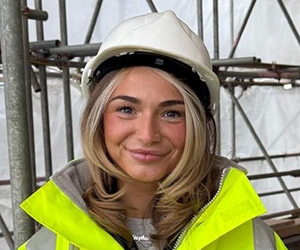 working on projects and within construction and towards the end of her apprenticeship secured an Assistant Capital Projects Officer role at the council, giving her the opportunity to work in construction.
Steph says:
"Being a young woman in the construction industry has been a great experience so far and I’m fortunate enough to say that everyone around me has been a great support.
"It is a male dominated field, but times are moving on now and we are starting to see more women doing jobs in those industries that traditionally only men worked in. I’m actually finding it very rewarding to know I’m a woman in what was a male dominated industry.
"On my apprenticeship, both of my line managers are women in construction work, so they have been great for me to look up to.
"They’re both doing so well in their careers that I eventually hope to carry on and do what they are doing one day.
"If there is a young woman reading this who is thinking about working in construction but who might be a little nervous about it being one of the traditionally male industries, I would say, go for it! Construction was never on my list as a possible career, but you’ll never know what you really want to do until you try it out.
"Now I’m in the field I’m so keen to develop all my skills in this area as I’ll be able to go in so many different directions in the future, it’s been a great opportunity for me."
Nadia’s story
Nadia is the voluntary services manager at Wrightington Wigan and Leigh Teaching Hospitals NHS Foundation Trust. She also has some long-term health conditions including Seronegative Rheumatoid Arthritis and hearing loss.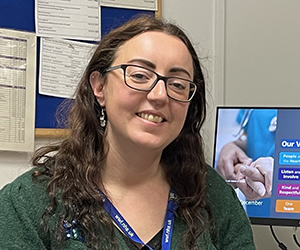
Nadia says:
"I oversee over 300 volunteers across our different hospital sites. A volunteer’s role is about making things nicer for patients, helping them on their journey at what can often be a difficult time.
"I studied languages and was originally planning to be a translator. I was offered a big role at an international bank and was considering taking it, but I’d started to evaluate what I wanted to do with my life and knew it was important to me to do something that was ethical, involved helping others and was personally rewarding.
"My health conditions include Seronegative Rheumatoid Arthritis, fibromyalgia (bouts of extreme pain and tiredness), and hearing loss. I was only diagnosed at age 21 (and with the fibromyalgia just last year).
"I’ve had experience as an in-patient and as an out-patient so I had started to think that I might like to do something to do with healthcare.
"I took this job as a temporary role at first but have now been here for 11 years and I think my experiences of healthcare help me to support patients more effectively as I can empathise and understand what they might be experiencing, especially for anyone with a long-term health condition. I understand the effects this can have on a person’s mental health as well as physical health and my hearing loss helps me to imagine how people with other sensory losses, such as sight loss, may be feeling.
"It's important in any workplace to have a diverse workforce with different life experiences if you want to offer your customers a good service. I’ve always found the NHS to be a great employer, and my manager has been supportive from the start. It’s the small things that can make such a difference.
"To other people with disabilities, I would say, you do have an important place in society. It upsets me if people don’t feel they have a role.
"Volunteering could be a great starting point. You also need to find the right company that has a diverse workforce and appreciates what you can offer.
"I wouldn’t want anyone to think that your disability will hold you back."
Dorothy's story
Dorothy, from Leigh, is trustee and treasurer at The Bridge (external link), a local community organisation set up to address food poverty, food waste, and social isolation. The Bridge has a food shop and café, using food industry surplus that would otherwise be thrown away, and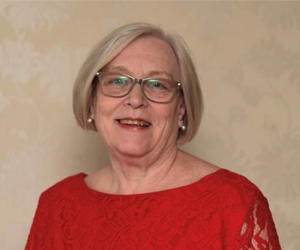 helps to bring people together.
Dorothy says:
"I got involved in The Bridge through my husband originally. He is part of Leigh Rotary Club, who funded the organisation when it was first set up. I’ve always been in business but I’d sort of retired although if I’m honest I’ve always been a bit of a workaholic, I like being busy.
"We started as a small organisation but the Covid period had a big impact, putting lots of people into crisis, so as the demand grew so did our organisation and we had to move to bigger premises.
"We now have 5,000 members and probably see around 200 people a day, five days a week. We have a 7,500 square foot warehouse, three refrigerated vans and 14 staff as well as many volunteers.
"It’s hard work but I do enjoy the feeling that we are helping so many people.
"I’m proud to be a woman from Leigh so I’ve always liked being so involved in my local community. I’ve done all sorts of things; I’ve been part of the soroptimists for 42 years, and I started my fundraising journey as a member of Friends of Leigh Hospital.
"One of my highlights was when the soroptimists sponsored a young Tibetan girl with her education and helped her to get a scholarship in Kentucky, USA, and I was honoured to go to her graduation. I enjoyed organising and helping to run centenary events at Pennington Flash and getting some nice Christmas lights in Leigh was also an achievement.
"There are a lot of challenges for women today. I see lots of different people through my work at The Bridge and I would say that childcare is still a big challenge. My granddaughter is about to go back to work after maternity leave and childcare is so in demand it’s hard to access.
"If I could pass on advice to other women I would say, be brave and have confidence in your abilities.
"Confidence does come as you go through life, but you have to believe that everyone can be successful. Learn from your failures and pick yourself up, don’t give up, and move on."
Michelle's story
Michelle Anderson was born and raised in Wigan and was an original member of the town’s first ever women’s rugby league team. Michelle tells us what drew her to rugby league, her highlights of playing and coaching and what she thinks still needs to change in women’s sport.
Michelle says:
"I’ve always been a massive Wigan Warriors fan. I remember going to Wembley with my grandad in 1984 to see them play against Widnes and that was it, I was hooked! My grandad helped me get a role as a stewardess in the Douglas Stand and I loved it, I just loved everything about rugby.
"In the summer holidays I would play on the fields at St Catherine’s recreation ground in Scholes with the lads’ teams and in 1988 I joined Wigan’s first women’s rugby league team based in Ince.
"We played 9-a-side and there were no lower age restrictions in the women’s team, which is hard to believe looking back. The regulations just hadn’t been developed for the women’s sport at that time.
"None of the men’s clubs were interested in supporting a women’s team back then. We trained on the road near St. Patrick’s Church. I remember going round to the clubs with a handwritten letter, asking them to take us on but I think women’s rugby league was seen as a bit of a joke. I definitely came across difficult views and some men’s attitudes towards us weren’t great, we always had to put up with inuendo, comments about, ‘women in mud’, that sort of thing, so it was hard to be taken seriously.
"When you look at how far we’ve come in that short time, now most clubs in the Super League have a women’s team, it’s marvellous really.
"I continued to play, moving to Yorkshire where I played for Halifax, and going on to coach both girls’ and boys’ teams, including being asked to support England’s under 16’s camp.
"There were so many highlights over the years. It’s the small things that mean the most, like when you suddenly see something click with a young person or as a team and you know you’ve had some input. When I was playing for Halifax, we played in France and when I was in my mid 30’s we played a few games in Russia. There had been a communications mix up and they thought we were the national team, so we ended up playing against Russia and against Kazakhstan – the women were massive, and we didn’t win – but it was all good life experience!
"There’s still work to be done in sport to achieve equality – equal pay for a start. I also think more needs to be done at a grass roots level. I work in a primary school now and a lot of PE is about building skills. I think it’s important to introduce children to competitive sport at a young age, to get them to find the sport for them, before they get stuck behind computers! It’s so good for their wellbeing.
"I don’t feel like I’ve been a pioneer, to me I’ve just been doing what I loved, but it is important for young girls to be able to find role models. It was hard for us back in the day with no proper training facilities or safeguarding. And I know we had to push though things like that to make it possible for girls and women to play in the way they can today – so it is nice to remember that I’ve been part of something.
"To any young girl who might be interested in playing rugby league today, I would say just go for it! It is competitive and it can be brutal at times but the friendships you can make and the opportunities and connections it can give you are fantastic so get involved."