The History of Ashton's Temperance Billiard Hall
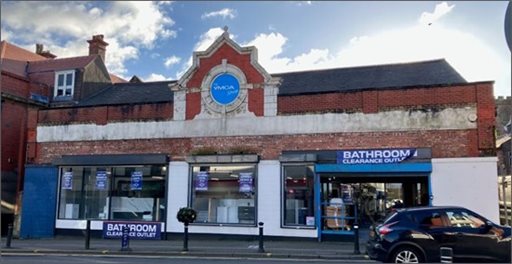
Ashton Bathroom Centre on Gerard Street. Source: Creative Heritage Consultants Ltd.
Ashton-in-Makerfield boasts plenty of historic properties, ranging from shops to pubs to banks, all set within the town centre conservation area. This blog post focuses on one building in particular, 67 to 69 Gerard Street, at the corner of Butcher Lane. From its appearance and design it seems like this building dates back to the early 20th century but - what was it?
Our research has taken many twists and turns. Some locals we spoke to remember the building being referred to as the ‘temperance billiard hall’ and so that is where we started our research.
What was temperance?
The temperance movement started in the 1830s to try to discourage people from drinking alcohol. It was at its height in the late 19th and early 20th centuries and encouraged by religious societies and civic worthies it became a driving force of moral campaigning. Temperance societies didn’t just campaign, lobby and protest against the use of alcohol but also took up practical efforts to provide substitutes for drinking as a use of leisure time. Part of its work was the establishment of places where working people could enjoy leisure time without the attraction of alcohol – such as coffee houses and Billiard Halls.
Our researcher on this article recently spoke to his father about the local temperance bar in his hometown of Northwich, Cheshire. He said he enjoyed going there because it was the only place in the town where you could buy a drink called ‘Sarsaparilla’.
Sarsaparilla was one of the many non-alcoholic drinks sold in temperance bars and cafes. Sarsaparilla itself has its origins in the Caribbean, where it was believed to have medicinal properties and health benefits. We found an advertisement from a chemists in Wigan. Seems like they thought it would solve everything from pimples to syphilis! I wonder if they supplied the temperance hall?
The drink is similar to ginger beer but with a flavour closer to American ‘root beer’. It was popular with adults in temperance halls as it had a strong herby and bitter flavour which was more acceptable to adults unlike children’s drinks which tended to be sweeter. Steves father never mentioned the term ‘root beer’, so we don’t know if he knows that's what it was!
The Temperence Billard Hall Company
The Temperence Billiard Company Ltd was founded in Manchester in 1899. They built multiple buildings across England, of which seventeen were built between 1906 and 1911.
The Company employed a Manchester architect named Norman Evans who was responsible for designing many of the temperance billiard halls and significantly contributed to the architectural style. Evans was initially assisted by Thomas Retford Somerford, who went on to become the lead architect for the company.
Three of the billiard halls that Evans designed are now listed buildings. These are located in Fulham, Lewisham and Chorlton-cum-Hardy in Manchester.
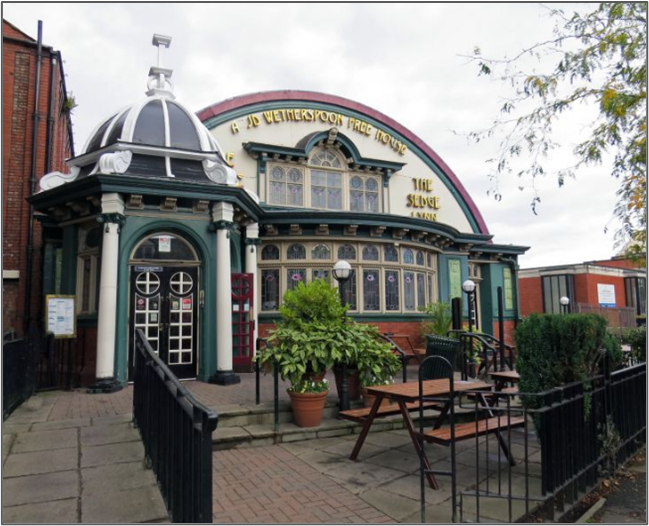 Front view of the Grade II listed former Temperance Billiard Hall in Chorlton-cum-Hardy
Source: British Listed Buildings.
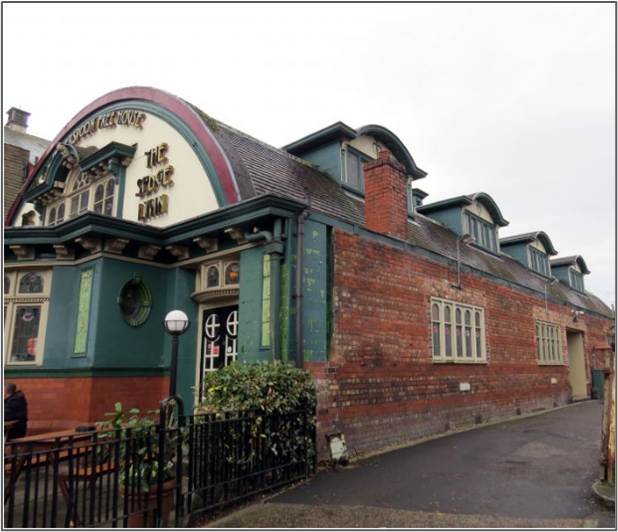 Side view of the Grade II listed former Temperance Billiard Hall in Chorlton-cum-Hardy.
Source: British Listed Buildings.
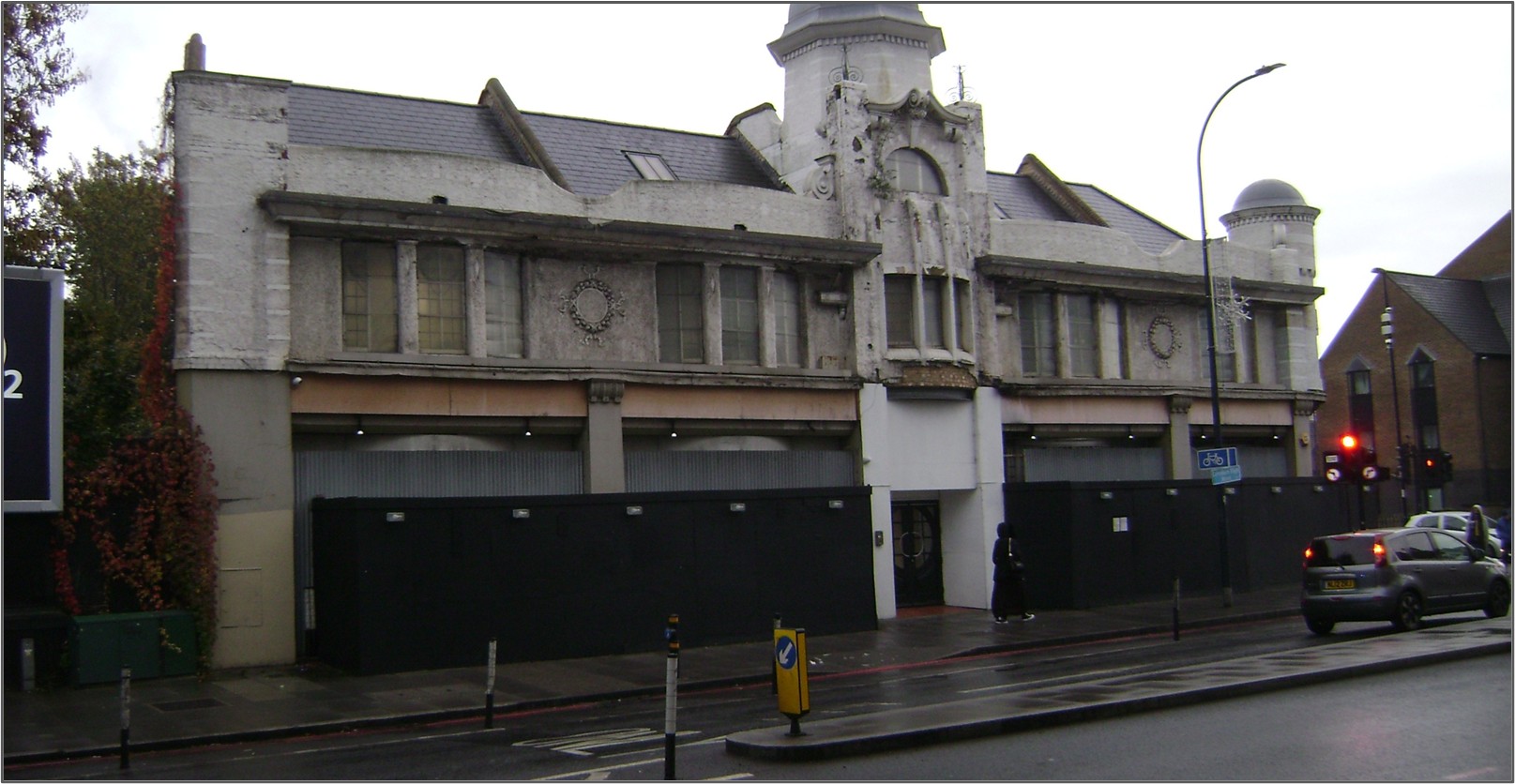 Temperance Billiard Hall in Lewisham.
Source: Brian Jessop, Historic England.
But apart from people calling it the 'Temperance Billiard Hall', there’s nothing to show it actually belonged to the company, and there were plenty of other companies around then.
To find out, a search of local newspapers was required. On the 11th December 1911 we find the report from the local Ashton-in-Makerfield District Council which mentions E.J. Riley gaining approval to build a billiard hall on Gerard Street.
Edward John Riley (known as E.J.) and J.T. Kenyon founded their sport equipment company in about 1897 in Manchester and over the next few decades would grow into producing billiard balls, billiard tables, bowling green balls and in the 1930s was the worlds largest manufacturer of cricket bats.
An article from the ‘Wigan Observer and District Advertiser’ 10th February 1912 shows that Mr. E.J. Riley was applying for a ‘billiard licence for a new hall already erected in Gerard Street.’ He stresses to the licencing committee that it was to be a modern building for sanitation, ventilation and heating… it also shows they already had billiards halls in Pemberton and St Helens and it would indeed be a ‘temperance hall’ only selling mineral waters and tobacco. Mineral waters was the generic name for flavoured waters or soft drinks. The costs indicated below were £2,500 – about a quarter of a million in today's money.
The former temperance billiard hall is not a listed building but a close look, especially at the roof level will demonstrate some architectural quality. It is a brick built, two-storey building with a simple pitched roof behind a parapet. This incorporates a central pediment with ‘crow steps’ and a circular feature, which might once have displayed the building name, constructed in white terracotta. There’s a wide fascia band across the building, which now has large windows below it. The presence of the fascia band (the strip of render) suggests the area over the windows has been built up in brickwork that was not intended to be on show.
The real mystery is what the shopfront looked like below the fascia? Given that billiard halls and temperance halls were designed to compete with pubs, we can imagine it may have been quite ornate and attractive, similar to the ones pictured above?
Ashton’s Billiard Hall in the Modern Day
Ashton’s Billiard Hall closed in 1960, and was converted for other uses. Get in touch if you remember the businesses who occupied the building over the next fifty years.
Google Streetview shows us that between 2011 and 2015 the building was used by ‘Quality Save’, and from 2015 to 2023 it was the ‘YMCA’ Charity Shop.
The building was occupied by Ashton Bathroom Centre although we believe it’s use may be changing again following the building grant to improve its appearance and help restore a level of quality to the building.
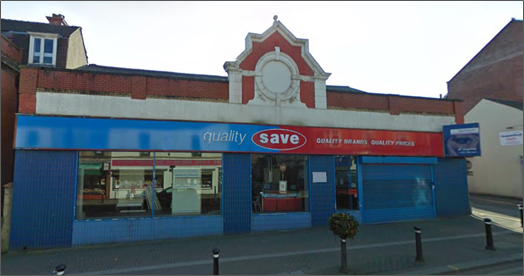 Quality Save which occupied the former Temperance Billiard Hall in Ashton.
Source: Google Streetview.
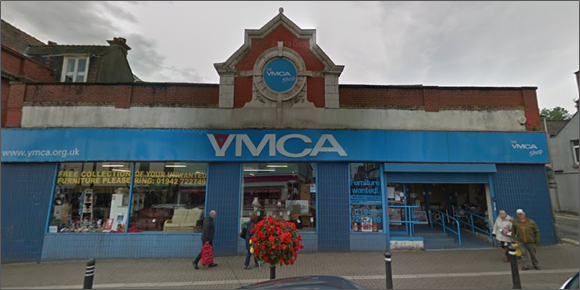 YMCA which also occupied the former Temperance Billiard Hall.
Source: Google Streetview.
As part of the Ashton-in-Makerfield Building Grant Scheme, the shopfronts at Ashton Bathroom Centre will be enhanced with traditional detailing, incorporating areas for signage, that will be more sympathetic to the character of the Conservation Area.
From the author
I hope this journey through the architecture of Ashton’s former temperance billiard hall, the temperance culture, the sport of billiards and the changes of use the building has undergone in the last sixty years or so has conjured up some memories.
Thanks for reading and please, if you have any further information that hasn't been included, get in touch.
Bibliography
What is Billiards. Available at Britannica (external link)
British Listed Buildings. Former Temperance Billiard Hall, Chorlton Ward. Available at British Listed Buildings (external link)
Failing_angel. (2010). Temperance Billiard Hall. Available on flickr (external link)
G. Baldwin & Co. (2025). The History of Baldwin's Sarsaparilla. Baldwin’s Original Sarsaparilla Drink. Available at Baldwins (external link)
Google. (2025). Google Streetview. Available at Google Maps (external link)
The Tabernacle Church. (2025). Building Origins, The Tab and Community. Available at The Tab and Community (external link)
Posted on Wednesday 1st April 2026