120 years of history at 38 Gerard Street
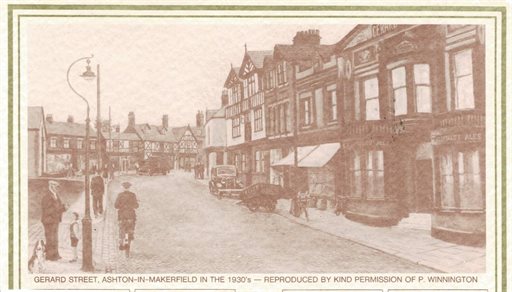
Artist's impression of Gerard Street in the 1930s. The first building on the right hand side is the Gerard Arms, Calderbanks occupied the left side of the building next to it. Source: Wigan and Leigh Archives, originally by P. Winnington.
Ashton Pound Plus at 38 Gerard Street is one of the first regeneration projects to start work in Ashton. The building owner, Jeff Calderbank, shared the history of the building where Calderbanks, started by his dad George, occupied the site for over 80 years between 1926 and 2008!
We’ve used adverts and trade directories to verify what we can, but the information in this blog post comes from personal insights from Jeff, if you have a connection to a building in Ashton please contact us and we’d love to share your story on the page.
On 8th of October 1892, a lease was agreed between The Right Honourable William Cansfield, Baron Gerard (Lord Gerard) and the Oldfield Brewery Company Limited (Owners of the Golden Lion). On 18th of October 1905, a second lease was agreed between the brewery and Peter Pennington, a builder from Lancashire, to develop 36 and 38 Gerard Street. These plots had previously been developed, and the existing buildings were demolished.
The new developments were sold to John Rowe in 1906 and stayed in the Rowe family until 1946. They were briefly owned by James Albert Reeve, before 38 Gerard Street was sold to its tenant, George Calderbank. George opened his shop around 1926, with trade directories showing that a singer sewing shop operated at the site up until that time.
Calderbanks sold goods such as stationary, clocks, watches, pens and toys as well as cigarettes. It also became a travel agent.
Starting in the 19th century, artisans celebrated ‘Saint Monday’ not a religious holiday, but a joke reference to Saint days, where workers would ‘enjoy’ Sunday and then take Monday off work to recover and relax. An official two-day weekend was trialled by Boots in the 1930s around the same time workers and trade unions campaigned for official weekends.
Two-day weekends provided more time for leisure, including holidays! Travel agents like Calderbanks sold low coast motor coach holidays to places like Blackpool, Wales and the South-West Coast (Devon and Cornwall).
In the late 1920s, George Calderbank was approached by the Scout Motor Company, based in Preston, to act as an agent for their coach services—known at the time as “charabancs.” Scout Motors operated a daily service to London, beginning in Preston and stopping at several towns along the way, including Ashton‑in‑Makerfield,imagine that journey before motorways!
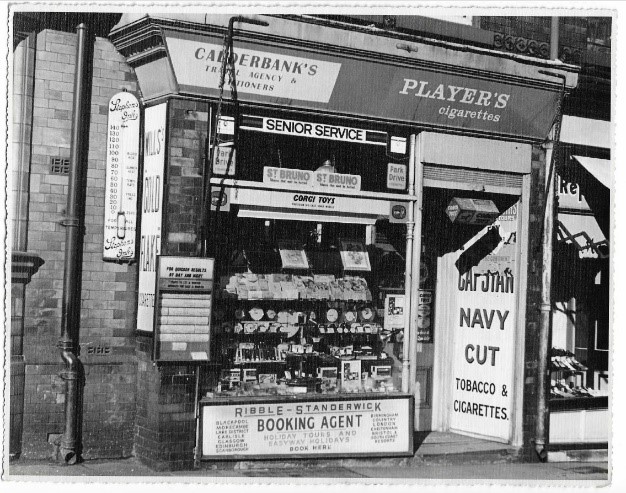 Calderbanks shop front before being refurbished in 1966.
Source: Jeff Calderbank.
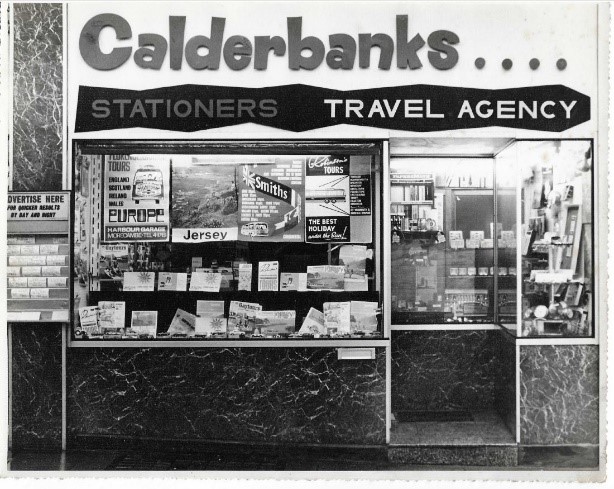 Calderbanks shop front after being refurbished in 1966.
Source: Jeff Calderbank.
The Calderbank family lived in the upper floors of the property until 1952 when it was let out as a flat, but in 1966 this was converted into a travel agent with the shop remaining on the ground floor. At this time, George had just retired with Jeff taking over the day-to-day running of the business. Over time, travel patterns changed. Trips to Spain became one of the most popular destinations. The package holiday industry developed, and Calderbanks became a fully accredited member of the ABTA (Association of British Travel Agents).
The Calderbank shop closed in 2008, and Ashton Pound moved into the premises later that same year. Jeff and his wife, Cynthia, continued running the business until their retirement in 2008, after which Ashton Pound Plus has occupied the shop as tenants ever since.
Plans for the site
Works are currently taking place as part of the Ashton Building Grant Upgrade Scheme. The photos in this blog post showcase the different look of 38 Gerard Street over the years, including the current works design. What do you think of how it has changed?
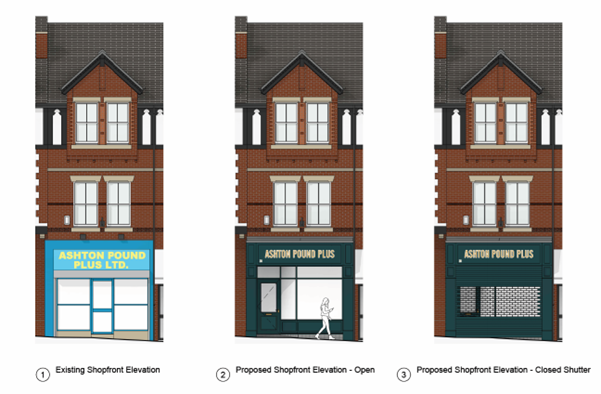 Calderbanks Design proposal by Patrick Wilson Architects for Ashton Pound Plus (2025).
References
Lancashire Evening Post. 7th September 1929.
Interview between Creative Heritage Consultant and Jeff Calderbank. 4 November 2025.
Newkey-Burden, C. 2024. The Birth of the weekend: how workers won two days off (external link). The Week.
Posted on Tuesday 3rd February 2026